Art of the Day Thread
- Started
- Last post
- 1,827 Responses
- Gardener1

Danish artist who submitted empty frames as artwork told to repay funding.
- damn beat me to it.
They commissioned him to make a piece on the theme of "take the money and run" which he did. brilliant I say._niko - and now I can't get this out of my head:
https://www.youtube.…_niko
- damn beat me to it.
- Gnash6


- lol at me, I had these open in imgur for a while, looked at them and came back here to excitedly post it in this thread. What a fuckwit.Nairn
- I’ve seen variations of these in the wildGnash
- The plot thickens https://i.haasie.com…skinny_puppy
- *cue spooky theremin muzakNairn
- I gotta fess up. Back in my days as an artist I worked as a duo. We went to our countries art biennal as visitors only. There was this huge square room...palimpsest
- ... where they had some works. Since it was an old building and not a gallery it had huge windows on each side that were covered by a veil to soften the light..palimpsest
- Because of the window frame the result were 4 crosses on each side. So we ran to the closest photocopy service and printed...palimpsest
- "Four crosses for an indifferent public"
The year and our name.
My partner won the same biennal two years later.palimpsest - ^ awesome!skinny_puppy
- <3Gnash
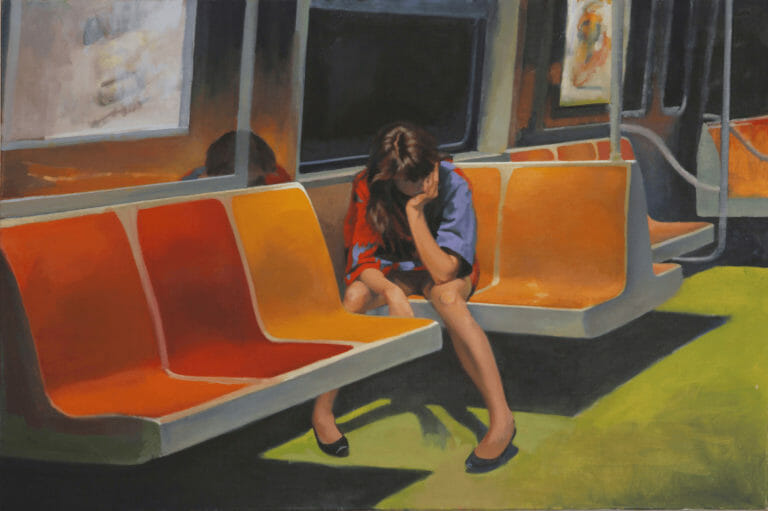
- Krassy6
- via https://www.qbn.com/…Krassy
- What a story! I instantly loved it. Probably because it reminds me of Hopper, but that doesn't matter. Wonderful painting!SimonFFM
- + :))milfhunter
- Krassy6

Jalal Merzoug
- Krassy8

Leonardo Nierman (Mexican, 1932-2023), Eternal Wind. Oil on board, 184 x 124 cm.
- +milfhunter
- Prompt?utopian
- stunning, desktop background = sortedGardener
- grafician15



Sergiu Ciochină
- David Hockney vibesmilfhunter
- great_niko
- Beautiful. Colours make me happyPhanLo
- +++scarabin
- 1
Please tell me these are natty because they look like oil on wood.garbage - Want of the day!canoe
- Prompt?NBQ00
- Prompts
https://i.imgur.com/…utopian - Prompts are lame. I looked it up and it's oil on wood, aka actual talent.garbage
- Then why are there prompts in the screenshot? Gorgeous but now I’m confused.monospaced
- https://www.thisisco…garbage
- utopian's prompts are unrelated.garbage
- ok, that's a reliefmonospaced
- PhanLo2
The sick violinist, 1886 - oil on canvas.
Cristóbal Rojas Poleo (Venezuelan, 1858-1890)
-

- this painting gave him canceroey_oey
- looks pretty sickmilfhunter
- Gnash0

https://www.nytimes.com/2023/06/…
[paywall cut/paste below]
With Hannah Gadsby’s ‘It’s Pablo-matic,’ the Joke’s on the Brooklyn Museum
The Australian comedian turns curator in a show about Picasso’s complicated legacy. But it’s women artists the exhibition really shortchanges.
If you studied art history or another of the humanities in the 1990s or 2000s — say, if you are around the age of the Australian comic Hannah Gadsby, 45 — you may remember the word “problematic” from your long-ago seminar days. Back then it was a voguish noun, borrowed from French, that described the unconscious structure of an ideology or a text. Soon, though, like so many other efforts to think critically, “the problematic” got left behind in this century’s great shift from reading to scrolling. These days we encounter “problematic” exclusively as an adjective: an offhand judgment of moral disapproval, from a speaker who can’t be bothered by precision.
A whole cast of professional art workers — conservators, designers, guards, technicians — has been roped in to produce “It’s Pablo-matic: Picasso According to Hannah Gadsby,” a small exhibition opening Friday at the Brooklyn Museum. (It is a title so silly that I cannot even type it; I am cutting and pasting.) The show, one of many worldwide timed to the 50th anniversary of the Spanish artist’s death in 1973, is essentially a light amusement following on from “Nanette,” a Netflix special from 2018. In that routine, a sort of blend of stand up and TED Talk, Gadsby riffed on having “barely graduated from an art history degree,” at the bachelor’s level, and attempted a takedown of the Spanish artist: “He’s rotten in the face cavity! I hate Picasso! I hate him!” Now this entertainer has come through the museum doors, but if you thought Gadsby had something to say about Picasso, the joke — the only good joke of the day, in fact — is on you.
- neverscared0

- Climate activists from the Last Generation group, covered in mud, protest outside the senate building in Rome. Seven activists from the group also climbed intoneverscared
- Rome. Seven activists from the group also climbed into the Trevi fountain in Rome and poured diluted charcoal into the water to turn it blackneverscared
- https://www.theguard…neverscared
- Nice picnbq
- Gardener8

- Alex Schaeferimbecile
- looks fire.milfhunter
- that's hot!utopian
- https://www.youtube.…Krassy
- Miesfan3
Pablo Picasso, 15 years.
Oil on canvas (166 x 118 cm)
- He uSeD tO Be SoOoo GoOd!palimpsest
- His first album is still his bestoey_oey
- Prompt?utopian
- Which one is Picasso?ShenanigansTV
- grafician0
"Ai Weiwei recreates Monet's water lilies using 650,000 Lego pieces"