Science
- Started
- Last post
- 1,014 Responses
- monospaced0
Test reproduced by independent labs and there is absolutely no superconductivity at room temperature. They most definitely did NOT get it this time.
- :(monospaced
- I really wanted this to be real. Ughmonospaced
- Still do!monospaced
- Who are you science boy?********
- excuse me?monospaced
- in the link from sted, a bunch of the labs had partial success, so something is happening or they are close_niko
- Yupmonospaced
- one independent lab.
also if it works, industry labs are already thinking about and developing implemantations.uan - We’ll see but the fact that it hasn’t been absolutely confirmed despite the worlds top labs working on it constantly for weeks is very worrying.monospaced
- In fact, there’s little to back up the claim at all, that’s verified. Nothing to confirm the claim in any way sadly.monospaced
- except 2 theoretical calculations that claim it could work.
https://www.science.…uan - blog post is old (2weeks), but I want to read his next update before I jump to conclusions:-)uan
- it’s now 2 months old and still no confirmationmonospaced
- https://www.science.… 2 possible explanation according to this update.uan
- 1) entire initial report was bungled
2) Authors are about a patent for creation of material. he links a patent application in Korean.uan - Thanks for that. Even the author agrees that there’s almost no likelihood whatsoever that it’s anything but a bullshit study and claim.monospaced
- palimpsest0
- Annie, are you OK?palimpsest
- wow, someone actually blue himself._niko
- You're still the pun master @_niko.
<3palimpsest - #oldnewsimbecile
- Papa Smurf was a fucking retardutopian
- NBQ00-2
- uan0
Michael Levin's research is amazing. Mapping Bioelectrical signatures in cells.
- Gnash0
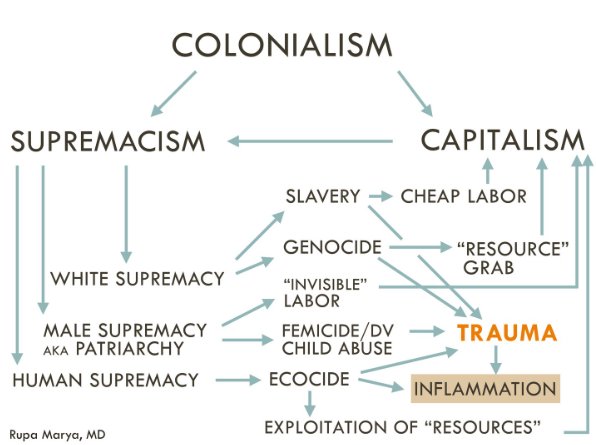
Science finally solves inflammation link
- ********0
“One of the most powerful laws is the second law of thermodynamics, which establishes that entropy—a measure of disorder in an isolated system – can only increase or stay the same, but it will never decrease.”
Based on this famous law, Vopson expected that entropy in information systems—which his previous research defined as a “fifth state of matter”—should similarly increase over time. But it doesn’t. Instead, it remains constant, or even decreases to a minimum value at equilibrium. This is in direct contrast to the second law of thermodynamics, which inspired Vopson to adopt the Second Law of Information Dynamics (or Infodynamics).
“We know the universe is expanding without the loss or gain of heat, which requires the total entropy of the universe to be constant,” Vopson wrote in The Conversation. “However we also know from thermodynamics that entropy is always rising. I argue this shows that there must be another entropy—information entropy—to balance the increase.”
Vopson argues that this law plays a role in atomic physics (electron arrangement), cosmology (see above), and biological systems. This last one is where Vopson makes a big claim: contrary to Charles Darwin’s idea that mutations occur randomly, mutations actually occur so that information entropy is minimized. Vopson analyzed the constantly-mutating SARS-CoV-2 (a.k.a. COVID-19) virus, and his paper on that investigation—published this past October in the journal AIP Advances—shows a “unique correlation between the information and the dynamics of the genetic mutations.”
What this all adds up to, in Vospon’s estimation, is that the Second Law of Infodynamics could also be used to prove that we live in a simulation.
“A super complex universe like ours, if it were a simulation, would require a built-in data optimization and compression in order to reduce the computational power and the data storage requirements to run the simulation,” Vopson wrote in The Conversation. “This is exactly what we are observing all around us, including in digital data, biological systems, mathematical symmetries and the entire universe.”
All of these claims require significant further testing and verification before even being considered plausible