Science Thursday
- Started
- Last post
- 123 Responses
- detritus0
Cannabis both relieves and promotes depression, depending on the dose..
- OBBTKN0
Another photo from NASA´s Opportunity rover.
Victoria Crater in Mars:
- TheBlueOne0
http://www.breitbart.com/article…
"Parallel universes really do exist, according to a mathematical discovery by Oxford scientists described by one expert as "one of the most important developments in the history of science".
- detritus0
Whoa!
The peculiar mechanics of a spiny ant-eater's penis and sperm..
..are those sperm spinning around like wee drill heads?
- detritus0
JesseJensen, I saw this and though of you, for some reason..
- ********0
JesseJensen's theory is far more elegant though. What was it again?
And damn you nairnitusi'm now going to have to read up on E8 and will not get much work done.
- ********0
Ok, so i have concluded, that if this guy Lisi is correct, anyone with a spirograph can unlock the mysteries of the universe.
- kelpie0
I've known that since I was a kid
- ********0

- kelpie0
Hackney is the meaning of the universe?
heaven help us all.
- OBBTKN0
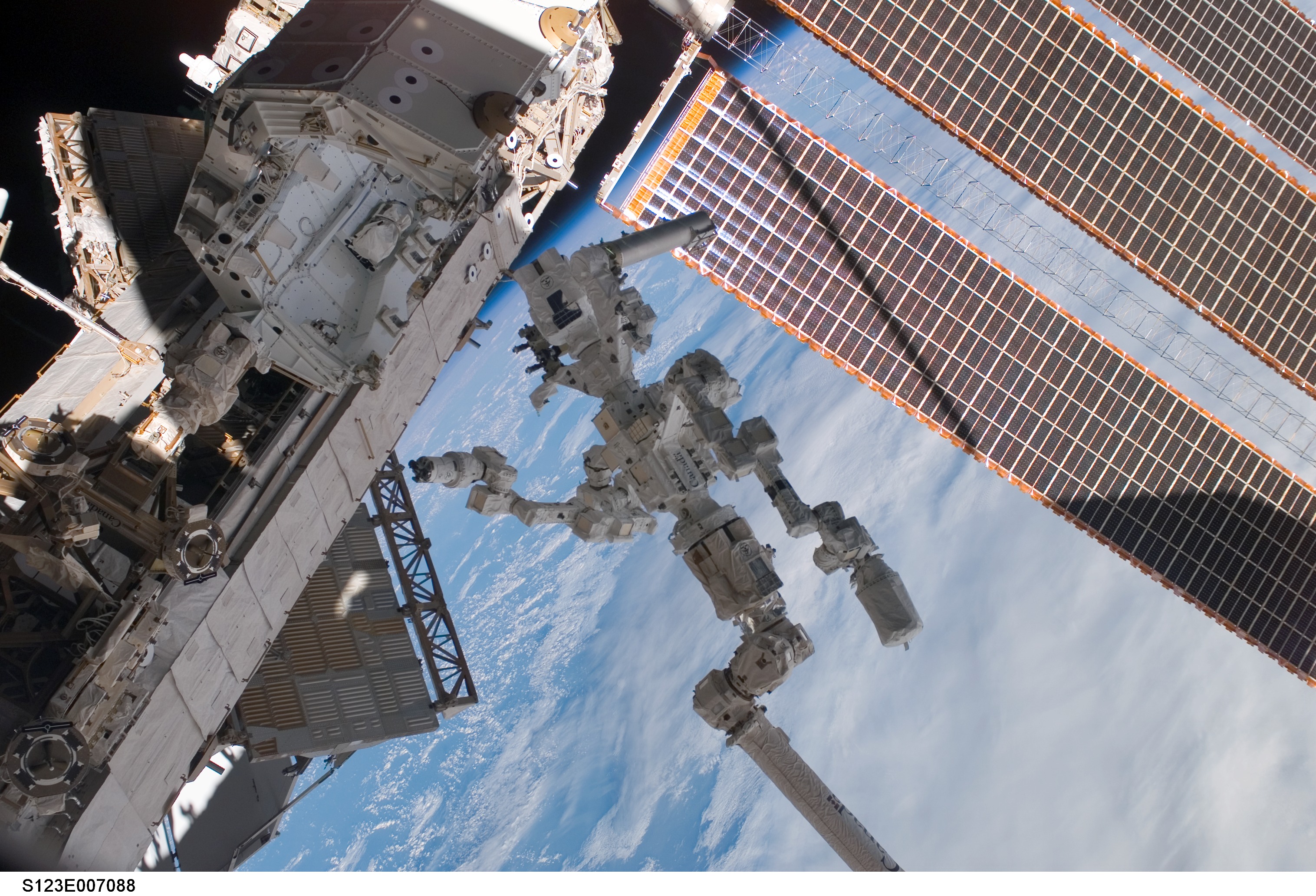
New Space Station Robot Asks to be Called "Dextre the Magnificent":
- detritus0
Vaguely optimistic and highly informative read about the steps and obstacles in our path to capitalising on Solar technologies.
http://europe.theoildrum.com/nod…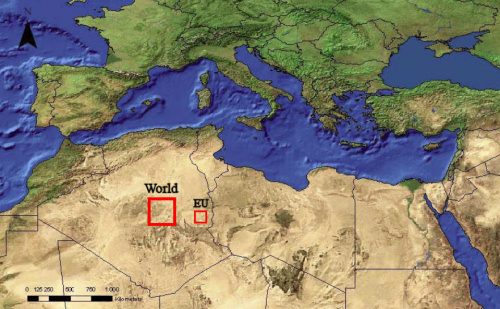
- detritus0
First ever images collected of a star going supernova, as it happens.
- neverblink0
Japanese Scientist claims to be able to perform nuclear fusion at room temperature:
- Him and thousands of others...don't believe it.TheBlueOne
- CALLES0
ee-Through Frogs, Alien Salamanders, and Spiny Bugs...Oh My
by Vera H-C Chan
25 hours agoNo Votes
A salamander that looks like E.T., a micosized frog smaller than a fingernail, and a spiny-crested grasshopper. Who says the age of exploration is dead?It's definitely not for Conservation International (CI). Their scientists have come back with some startlingly vivid images of endangered and never-before-seen critters from a whirlwind trip to the Nangaritza Protected Forest in Ecuador, near the Peruvian border. CI researchers came across at least 15 species of creatures and plants "unknown to science."
One of the most remarkable creatures is the Hyalinobatrachium pellucidum, also called a glass or crystal frog because you can see through its transparent flesh (right down to its guts). This guy's not new, but he's definitely endangered, so the find is heartening for environmentalists.
The purpose of the three-week biodiversity study was to identify species and make conservation recommendations for ecotourism possibilities, which the Ecuadorian locals are entertaining. It also turns out that frogs and insects yield medicinal properties, and a proper population survey is needed to see what else is out there in the forest.
According to Bloomberg, out of 14 million plants and animals in the world, human beings have been acquainted with only about 1.8 million. Below are more images of new friends; you can find other photos and expedition details at CI's site.
- CALLES0
It's Official: Water Found on the Moon
By Andrea Thompson
Senior Writer
posted: 23 September 2009
06:17 pm ET
This story was updated at 10:49 p.m. EDT.Since man first touched the moon and brought pieces of it back to Earth, scientists have thought that the lunar surface was bone dry. But new observations from three different spacecraft have put this notion to rest with what has been called "unambiguous evidence" of water across the surface of the moon.
The new findings, detailed in the Sept. 25 issue of the journal Science, come in the wake of further evidence of lunar polar water ice by NASA's Lunar Reconnaissance Orbiter and just weeks before the planned lunar impact of NASA's LCROSS satellite, which will hit one of the permanently shadowed craters at the moon's south pole in hope of churning up evidence of water ice deposits in the debris field.
The moon remains drier than any desert on Earth, but the water is said to exist on the moon in very small quantities. One ton of the top layer of the lunar surface would hold about 32 ounces of water, researchers said.
"If the water molecules are as mobile as we think they are — even a fraction of them — they provide a mechanism for getting water to those permanently shadowed craters," said planetary geologist Carle Pieters of Brown University in Rhode Island, who led one of the three studies in Science on the lunar find, in a statement. "This opens a whole new avenue [of lunar research], but we have to understand the physics of it to utilize it."
Finding water on the moon would be a boon to possible future lunar bases, acting as a potential source of drinking water and fuel.
